This article takes a brief look at the history of education in some of Hertford's primary and secondary schools.
The Elementary Education Act of 1870 made in compulsory for children between the ages of 5 and 10 to attend school. Further legislation in 1891 saw the introduction of state payments of school fees - up to ten shillings (50p) per head, making primary education effectively free.
Most 19th Century schools were either philanthropic establishments or run by the church. In 1899 the school leaving age was raised 12.
A number of schools were located close to All Saints' Church, including the Green Coat School, Cowper School, Hale's Grammar School and Longmore, Abel Smith, All Saints' Infants School and The School of Industry.
The Education Act of 1902 established Local Education Authorities (LEAs), with the ability to raise local taxes to pay for schools. Church, board and endowed grammar schools now came under the supervision of local authorities, who also paid for the teachers and maintenance of all schools.
The school leaving age was again raised to 14 in 1918.
Hertford's school were re-organised in 1931, replacing all-through schools with a two-tier system of primary and secondary schools.
The Butler Act of 1944 introduced free education for all children and raised the school leaving age to 15.
The school leaving age was again raised in 1972 to 16.
Christ's Hospital
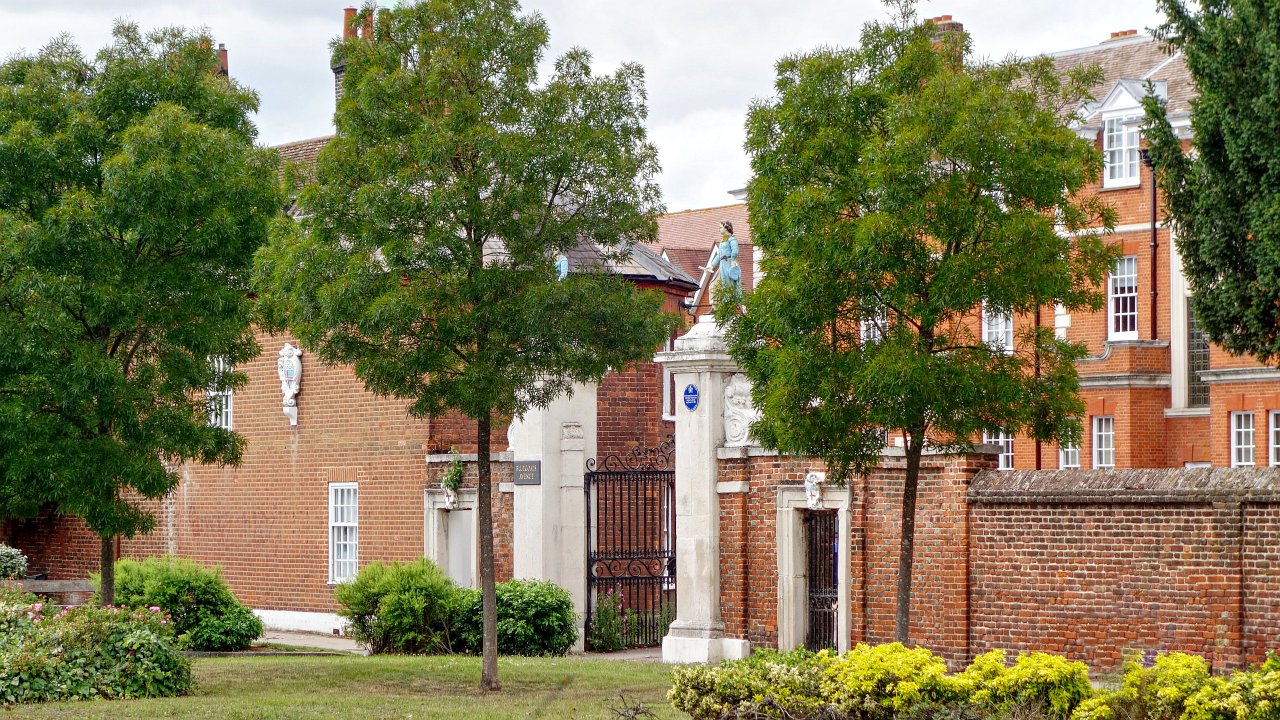
Christ's Hospital School, sometimes known as The Bluecoat School, was founded in 1546 by Edward VI and moved to Hertford in the late 17th century, possibly to escape the plague. It was principally a boys school but some girls did attend. In 1902 the boys moved to Horsham, leaving the girls on the Ware Road site until 1984, when they too moved to Surrey. The site is now offices and sheltered housing for the elderly. more...
The Cowper Testimonial School
The Cowper Testimonial School was opened in 1841 and named after Henry Cowper, who financied and equipped The Infirmary (later to become Hertford County Hospital). The school initially educated 200 boys in buildings in London Road. The premises remained in use until 1957, when the phased proces of moving pupils to the new school at Balls Park started (now Simon Balle School). The buildings have now been demolished and the site now occupied by homes in Gwynn's Walk.
The Green Coat School
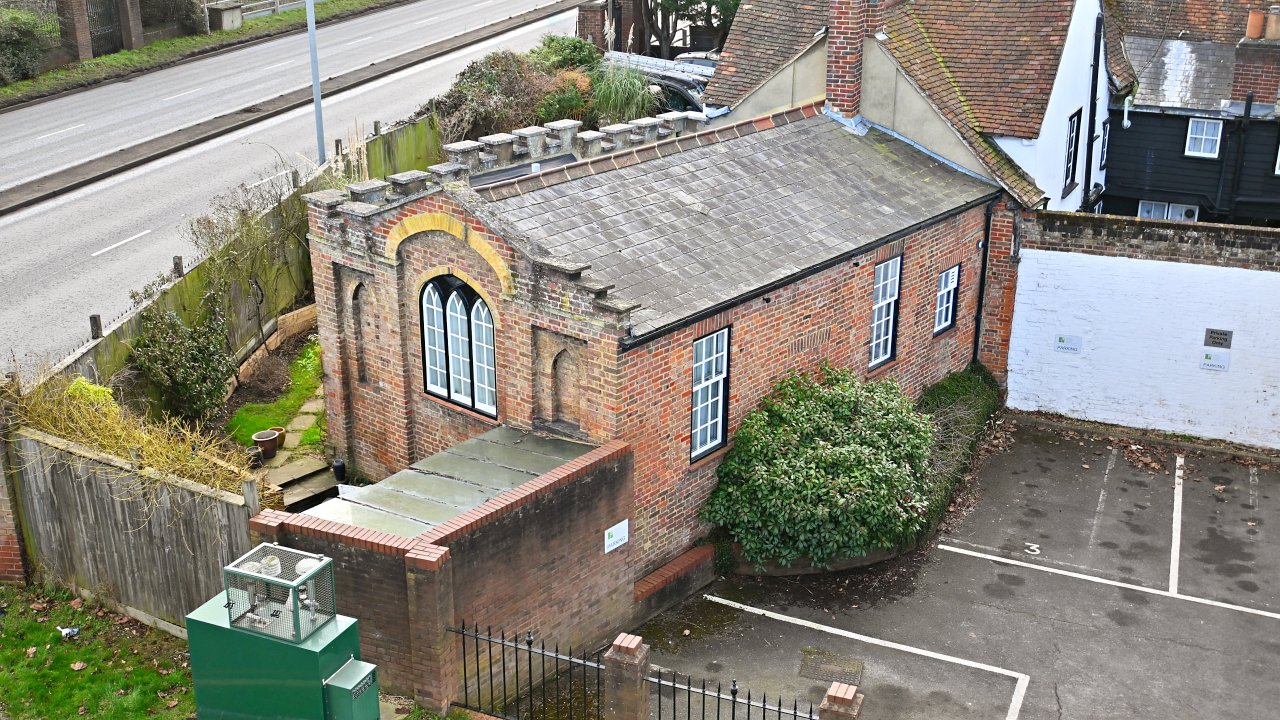
Gabriel Newton gave money to establish The Green Coat School in about 1762, although the exact location is unknown. Fifty years later in 1812 the school moved into premises opposite All Saints' Church (above). In 1867/8 the school moved again to new premises in Old London Road, following an increase in its endowments in 1861. However, the General Education Act of 1870 brought competition in the form of the first state subsidised schools. Unable to survive, the school closed in 1894 and the buildings were eventually sold to Neale's Garage. The site is now a car park for Stag House.
The National School
The National School movement began in 1811 and was established by a group of philanthropists for the basic education of poorer children of primary school age. The school in Hertford was situated close to Miller's yard - named after the first Master of the school - and just outside the walls of Hertford Castle, the land having been given by The Marquis Of Salisbury. By 1825 there were 100 boys being educated at the school. However, by 1841, the land had been reclaimed by The Marquis and the pupils absorbed into the Cowper School.
Hertford Grammar School

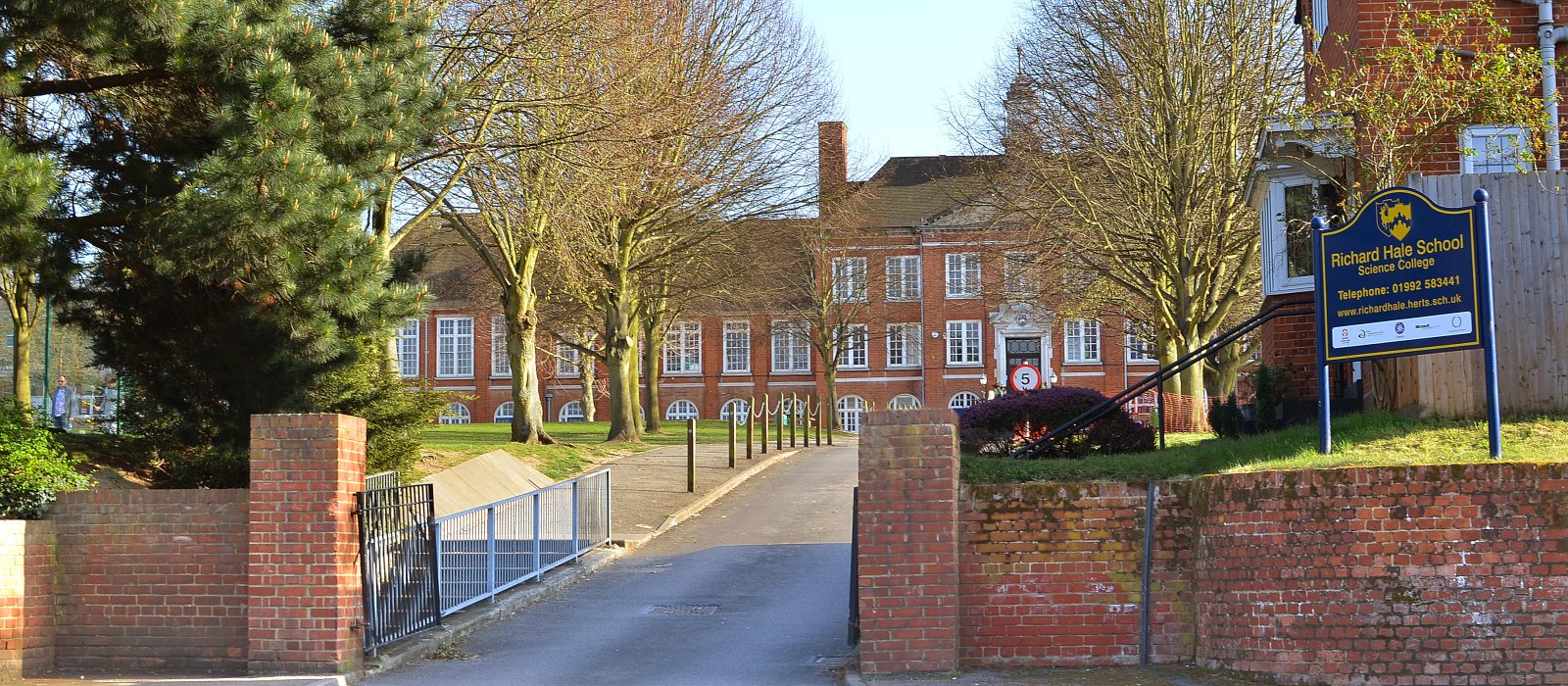
What is now known as Richard Hale School has one the longest histories of any school in the town.
Hale's Grammar School was founded by Richard Hale in 1617 close to what is now All Saints' Church.
In 1904 the school became Hertford Grammar School and in 1930 moved to new premises in Pegs Lane under the auspices of the local educational authority. In the late sixties the school relinquished its grammar school status and became comprehensive, changing its name to Richard Hale School. It is now one of three secondary schools in the town. The original building survives to this day as part of Longmore.
Longmore
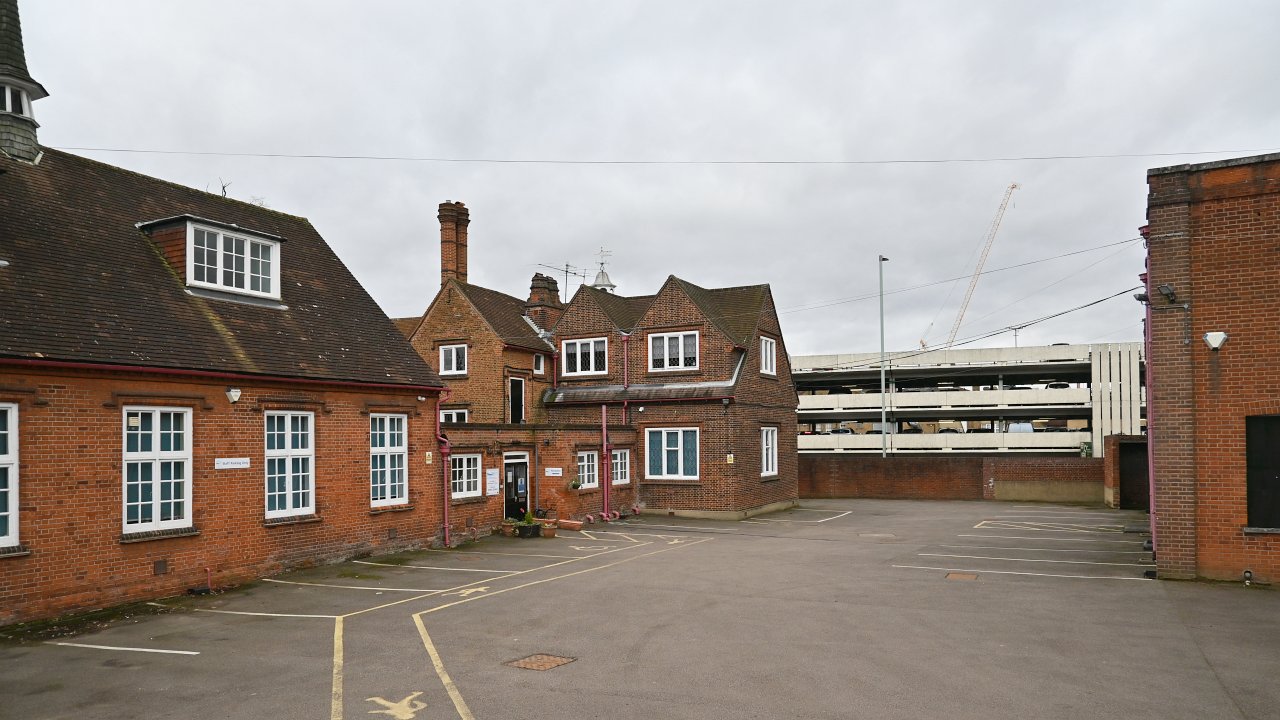
With the 1930 relocation of Richard Hale School to the new grammar school in Hale Road, the site became known as Longmore and a new school established named Longmore Senior County Council School for Boys and Girls.
In September 1938, the girls were moved to Port Vale School and Longmore became an all-boys secondary school.
In June 1943 the boys moved out and the school became Longmore Senior Girls School .
Cowper Boys School and Longmore merged in 1952 and the school became the Longmore Secondary Modern School.
The school closed in June 1958 when all the pupils were moved to the new Balls Park Secondary Modern School, now Simon Balle.
The buildings are now used as an Educational Support Centre for Key Stage 3 & 4 children who have been permanently excluded from mainstream education.
The Ragged School

The Ragged School in Butcherley Green was provided for children of poor families in 1859, many of whom lived close by. The money for the school was provided by William Pollard, who kept a drapers shop in the town named Gravesons. The school closed in 1877 and was latterly a Salvation Army Hall. The building was demolished following the closure of the bus station in the 1980s. The site is now occupied by Bircherley Court.
The School of Industry for Girls

The School of Industry for Girls was opened in 1793 by three members of The Society Of Friends (Quakers). The aim of the school was to prepare pupils for service in large houses. In 1850 the school moved to new premises in Churchfields. The building now forms part of Abel Smith JMI.
Abel Smith School
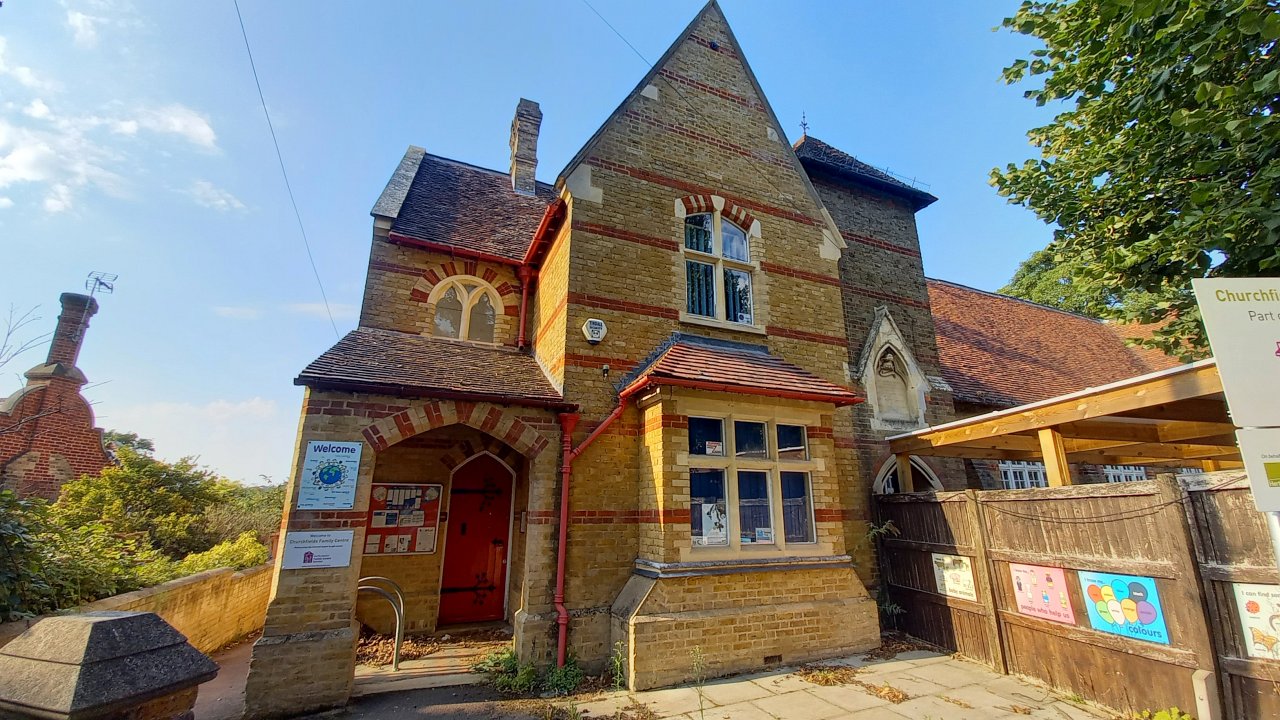
The Abel Smith Memorial school opened in Church Path in 1861. Initially it was a girls school but later became a junior mixed school.
All Saints' Infants School
All Saints' Infants School was established by public subscription in 1846. The premises of the School of Industry were acquired in 1902, later to become known as Faudel Phillips Infants School and then Abel Smith.
Faudel-Phillips School
Formed by the amalgamation of The School of Industry for Girls and All Saints' Infants School. It Later became Abel Smith School. Sir George Faudel-Phillips lived at Balls Park and was an MP for the town in the late 19th century.
St.Joseph's Convent School
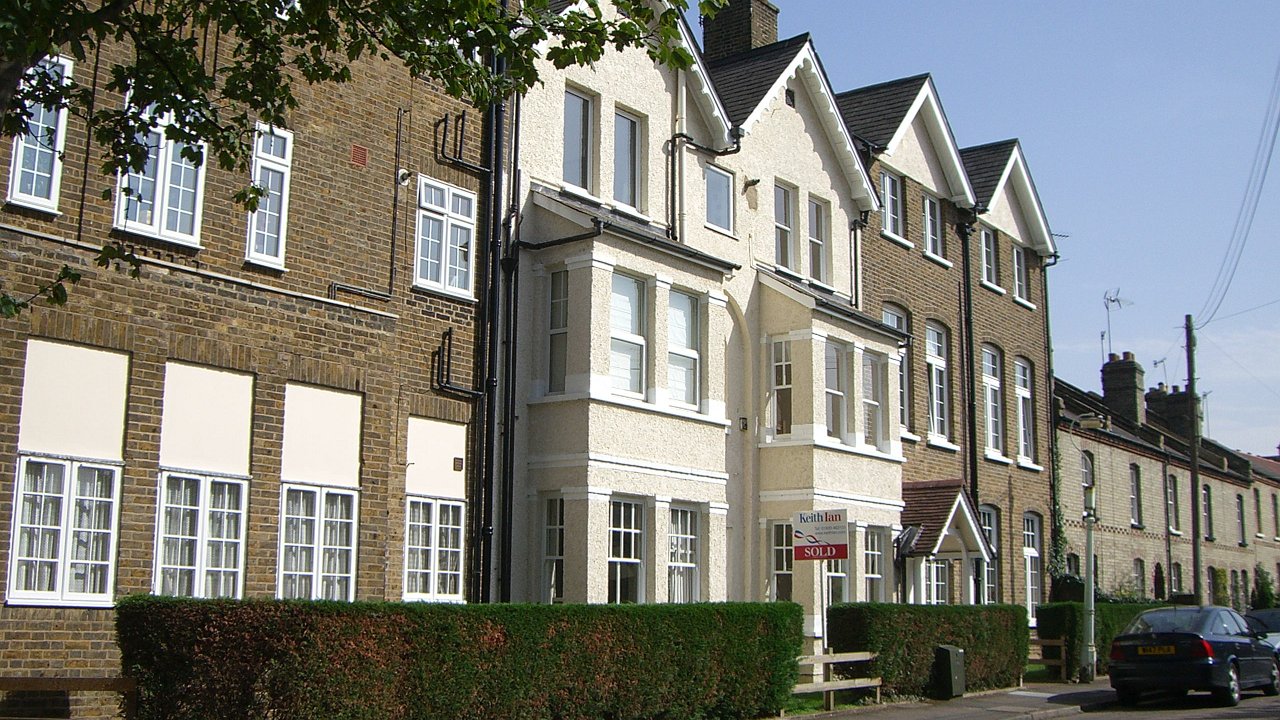
St.Joseph's Convent School appears to have opened around the turn of the century in St.John's Street opposite the Catholic Church. A new building was added in 1938, but in 1952 the school moved to Hertingfordbury and the premises were let out as flats.
Christ Church Infants School
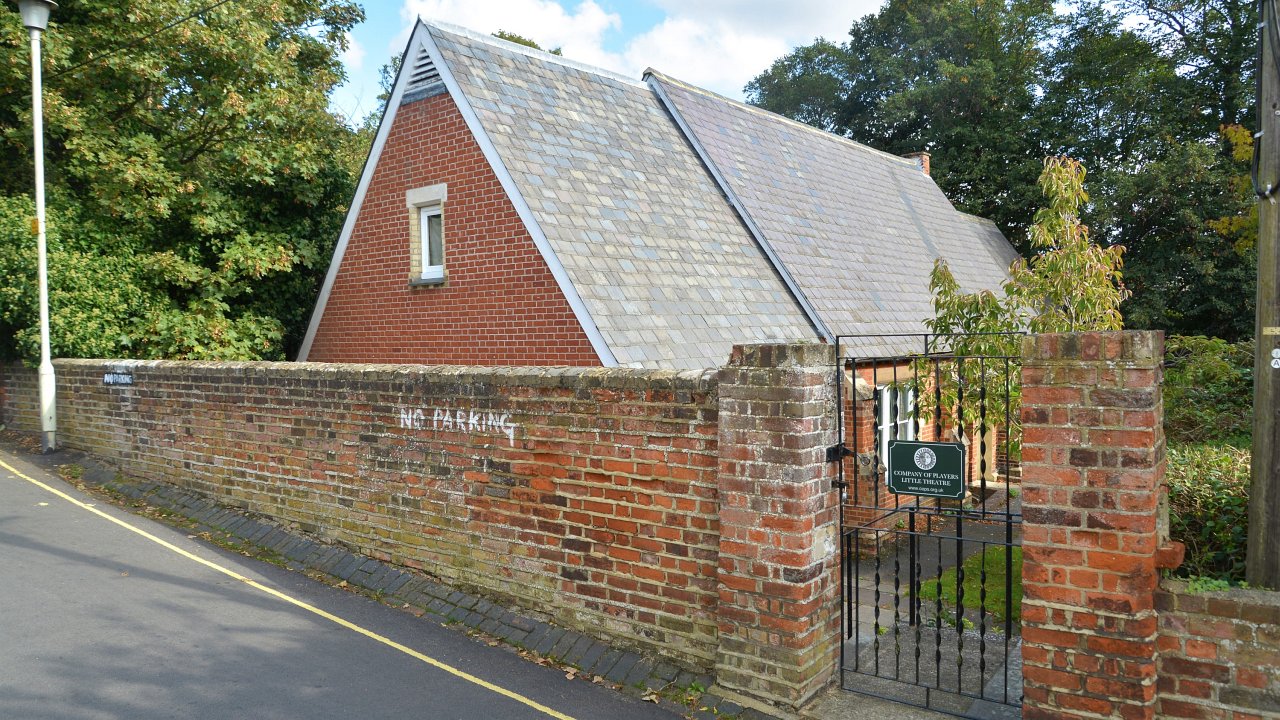
Christ Church Infants School was built on a small plot of land in Balfour Street between the church and the railway, opening in June 1869.
In 1902, along with Cowbridge School, Christ Church Infants became one of the first schools to come under county council control.
By the early 1920s there was an excess of available school places and with just 46 at Christ Church, the decision was made to close the school.
The premises continued as a church hall until 1970 when it was purchased by The Company of Players. The building is now a small theatre.
The British School

The British School was established in the early 19th century near Cowbridge by non-conformists catering for all children. In 1903 Cowbridge School and Christ Church Infants School in Port Vale became the first two schools to become county council schools. The school became known as Cowbridge School and in 1931 became a JMI. The name of the school changed again in 1943 to Port Vale Junior Mixed & Infants School. After the war the building becoming an annexe for the Cowper School but closed when Simon Balle School opened.
The buildings were abandoned in 1968 and can still be found in Dimsdale Street. A covenant on the buildings means they can only be used for educational purposes.
Port Vale School
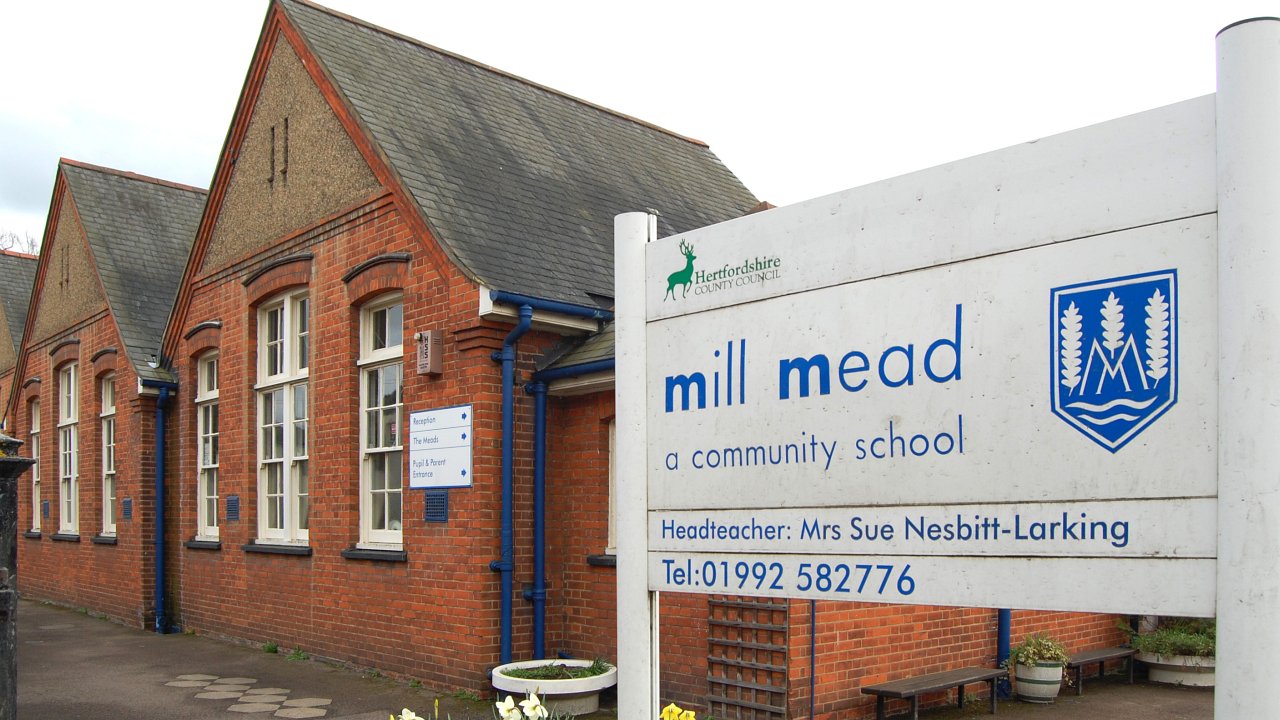
Port Vale Boys School opened on 13th April 1915 with four teachers and 124 boys.
Following the introduction of primary and secondary education, the junior boys of Port Vale were relocated to Cowbridge School with the senior boys going to either The Cowper School in London Road or Longmore. Port Vale then became a secondary school for girls.
The school became a Junior Mixed Infants on 28th June 1943 and is now known as Mill Mead School.
St.Joseph's Roman Catholic Primary School
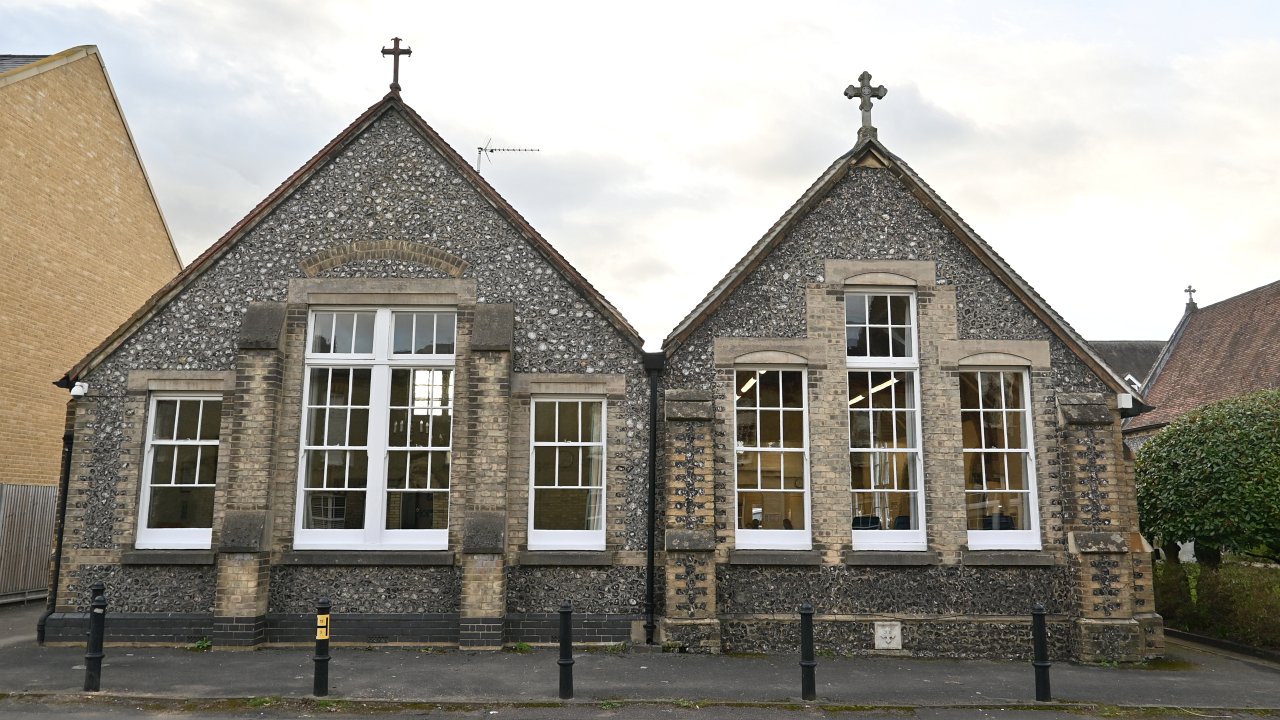
St.Joseph's primary school was located in St.John's Street, next to the Catholic Church, built in 1863. The school moved to new premises in North Road in 1968 and the premises are now used as a church hall.
Updated 6th February 2022
Many thanks to Peter Ruffles and Geoffrey Cordingley for their assistance with this article.
More information about the history of education in Hertford can be found at Our Hertford & Ware.